Table of Contents
Imagine parking your car outside Walmart on a busy Saturday afternoon. You walk inside, purchase a few groceries, and return home. To you, it is an ordinary shopping trip. But to a hedge fund analyzing millions of satellite images, your parked vehicle could become part of a much larger financial prediction.
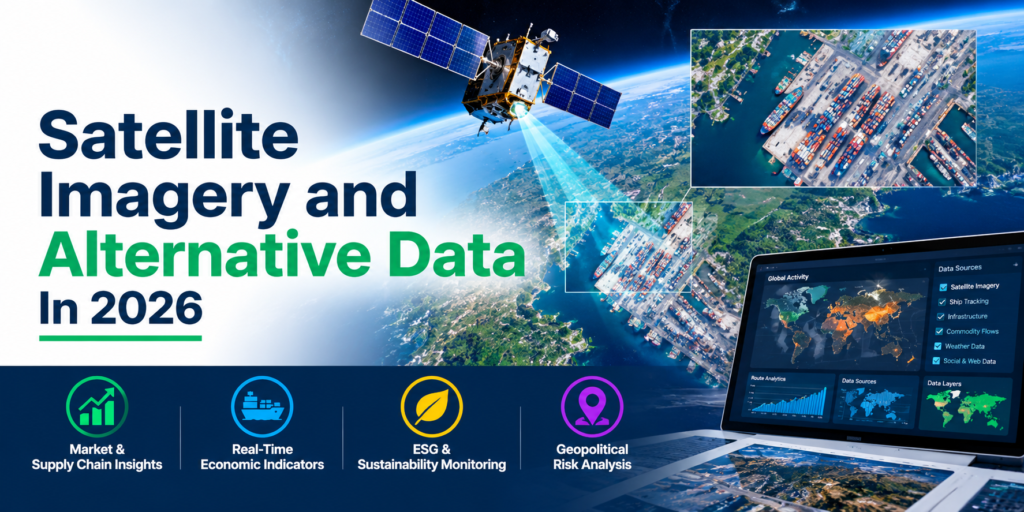
Thousands of miles above Earth, commercial satellites capture images of shopping centers, warehouses, factories, and parking lots. Investment firms use sophisticated data analytics and artificial intelligence to translate these observations into estimates of business activity, sometimes before companies publish their quarterly financial results.
This is the rapidly evolving world of hedge funds data, where traditional financial analysis meets unconventional sources of information.
Instead of waiting for official earnings reports, hedge funds can examine changes in consumer behavior, supply chains, online spending, and physical infrastructure. This information, commonly known as alternative data, may help investors anticipate business performance before it becomes obvious in financial statements.
But the same technology that offers powerful financial insights also raises uncomfortable questions about accuracy, market fairness, and the growing information gap between institutional investors and ordinary traders.
So how do hedge funds turn satellite imagery into financial predictions, and what are the hidden risks behind this extraordinary approach?
What Is Hedge Funds Data and How Does Alternative Data Work?
Hedge funds data refers broadly to information that hedge funds collect and analyze when making investment decisions. This includes conventional financial information alongside alternative datasets that provide additional insights into companies, industries, and economic conditions.
Traditional investment analysis relies heavily on financial statements, stock prices, earnings announcements, economic indicators, and company disclosures.
Alternative data investing takes a different approach.
It examines information that may reveal business activity before that activity is reflected in official financial reports.
According to the CFA Institute’s research on alternative data and artificial intelligence, investors increasingly explore unconventional datasets such as satellite images, consumer transactions, social media activity, and digital behavior.
These sources can offer a broader perspective on economic developments.
| Alternative Data Source | What Investors Analyze | Potential Insight |
|---|---|---|
| Satellite imagery | Parking lots, shipping ports, factories | Retail demand and industrial activity |
| Consumer transactions | Aggregated card spending | Purchasing behavior and revenue trends |
| Website traffic | Visits and user engagement | Online business performance |
| Mobile location data | Aggregated movement patterns | Store visits and customer activity |
| Social media analytics | Public discussions and sentiment | Consumer preferences and market perception |
| Logistics information | Shipping activity and supply chains | Production and distribution conditions |
The underlying principle is straightforward: businesses generate signals long before they publish financial results.
Identifying those signals is where hedge fund analytics becomes particularly valuable.
1. Satellite Imagery Reveals Retail Sales Before Earnings Reports
One of the most fascinating applications of hedge funds data involves monitoring parking lots outside major retail stores.
The idea is simple. More vehicles may indicate greater customer activity, while fewer vehicles could signal weaker demand.
This approach has historical roots.
Walmart founder Sam Walton reportedly observed parking lot activity as a practical indicator of how stores were performing.
Modern hedge funds have expanded that observation into a sophisticated system using satellite imagery, computer vision, and predictive analytics.
Commercial satellites photograph shopping centers across large geographic areas. Software identifies parked vehicles, estimates occupancy, and compares observations across different periods.
A hedge fund can then examine whether traffic appears to be increasing or declining at stores belonging to companies such as Walmart, Target, or Costco.
The Walmart Parking Lot Study
Researchers Panos Patatoukas and Zsolt Katona at the University of California, Berkeley investigated whether satellite observations could help anticipate financial results.
Their Berkeley Haas research on satellite imagery and hedge fund trading found that changes in parking lot traffic contained information about retailers’ subsequent earnings announcements.
The researchers reported that a historical trading strategy using this information produced approximately 4% to 5% in abnormal returns around quarterly earnings announcements.
That result came from a specific historical analysis. It does not mean investors can consistently achieve those returns today.
Nevertheless, the research demonstrated something important: information about real-world business activity can sometimes reveal financial trends before public earnings announcements.
Why Parking Lot Activity Matters
Consider two competing retailers.
One has consistently fuller parking lots compared with the same period last year. The other experiences declining vehicle traffic.
An investment firm might interpret these patterns as indicators of changing consumer demand.
However, parking lot occupancy is not equivalent to actual sales.
Customers may spend different amounts, vehicles may belong to employees, and online purchases may rise even when physical store visits decline.
Satellite-derived estimates are therefore most useful when combined with other information.
2. Consumer Spending Data Provides Powerful Revenue Insights
While satellite imagery helps measure physical activity, consumer transaction data can offer another perspective on business performance.
Some financial data providers compile appropriately sourced and aggregated transaction information to estimate spending patterns.
Investment firms may examine purchasing frequency, average transaction values, and spending changes across industries.
For example, suppose a retailer’s reported quarterly revenue is not yet available.
A hedge fund might study aggregated transaction trends to estimate whether customers have increased their spending compared with the previous period.
When combined with store traffic estimates, these observations may help analysts develop more informed revenue forecasts.
However, consumer transaction datasets have significant limitations.
They may cover only selected banks, payment networks, or customer groups. Certain demographic segments can be overrepresented, while cash transactions and some other purchases may be missing.
This creates a risk of drawing conclusions from incomplete information.
Reliable investment data analytics requires careful adjustment for sampling bias and changes in the underlying dataset.
3. Artificial Intelligence Turns Raw Hedge Funds Data Into Predictions
The volume of alternative data available to investment firms can be enormous.
Analyzing thousands of satellite images, millions of transactions, or extensive online activity records manually would be impractical.
Artificial intelligence helps transform this information into structured observations.
How AI Analyzes Satellite Imagery
Computer vision systems can identify physical objects within images, including vehicles, ships, buildings, and industrial equipment.
For parking lot analysis, an AI system might follow several steps:
- Identify the boundaries of a retail parking area.
- Detect and count visible vehicles.
- Correct for shadows, image quality, and observation conditions.
- Compare occupancy with historical patterns.
- Feed the resulting measurements into forecasting models.
Machine learning models then examine whether these observations have historically correlated with future business performance.
The process connects three technologies: satellite imagery, computer vision, and predictive analytics.
AI does not automatically discover reliable investment opportunities. Its results depend on data quality, model assumptions, and whether historical relationships remain relevant.
The Danger of Misleading Predictions
A machine learning model may identify patterns that appear highly profitable during historical testing but disappear in real markets.
This problem, known as overfitting, occurs when a model learns historical noise rather than a relationship likely to generalize.
Investment firms must evaluate models using appropriate out-of-sample testing and realistic transaction costs.
Without these precautions, sophisticated hedge funds data analysis can generate impressive-looking but unreliable predictions.
4. Supply Chain Data Helps Hedge Funds Anticipate Industry Trends
Alternative data extends well beyond shopping centers.
Hedge funds can use satellite imagery and logistics information to observe economic activity across shipping ports, industrial facilities, energy infrastructure, and agricultural regions.
These observations may offer clues about production, demand, and supply disruptions.
Shipping and Global Trade
Changes in shipping activity can help analysts study global trade conditions.
For example, unusual congestion at a major port may indicate transportation delays or changes in cargo flows.
However, congestion can result from numerous causes, including weather, labor disruptions, operational limitations, and seasonal demand.
Oil Storage and Energy Markets
Remote sensing techniques can help estimate activity at certain energy facilities.
These estimates may supplement conventional industry statistics when evaluating supply conditions.
Agriculture and Commodity Markets
Satellite observations of vegetation, soil conditions, and agricultural regions can contribute to crop forecasting.
Combined with weather data and historical production information, these measurements may support estimates of future agricultural output.
The value of alternative data is not limited to predicting individual stock prices.
It can also help investors interpret broader economic developments.
5. Digital Behavior Reveals Emerging Consumer Trends
A significant portion of modern business activity occurs online.
Consumers search for products, visit websites, compare services, download applications, and share opinions across digital platforms.
These behaviors can create signals about market demand.
Hedge funds may analyze website traffic, app engagement, publicly accessible online discussions, and aggregated digital purchasing activity.
For example, increasing website visits could indicate growing interest in a retailer’s products.
But website traffic alone does not reveal whether visitors actually make purchases.
A company may attract millions of visitors while experiencing poor conversion rates.
This is why advanced analytics needs context.
The same principle applies to business marketing: understanding customer behavior matters more than counting interactions alone.
At Signature AI Marketing, the broader focus on artificial intelligence and data-driven growth reflects how behavioral information can inform business strategy beyond financial investing.
The distinction is that investment firms use these signals to estimate financial outcomes, while marketers use customer insights to improve targeting, engagement, and business performance.
6. Alternative Data Can Provide a Competitive Investment Advantage
Financial markets respond to information.
When companies announce earnings that substantially exceed or fall below expectations, stock prices may react quickly.
Investors who can estimate those results accurately before an announcement may be better positioned to manage risk or identify trading opportunities.
Alternative data can help investors develop expectations independently of company forecasts.
But an important distinction exists between predicting strong sales and predicting a rising stock price.
A company can report excellent results and still see its shares decline if investors expected even stronger performance.
Similarly, disappointing results may not necessarily cause a stock to fall if the market had anticipated worse conditions.
For hedge funds data to create a meaningful trading advantage, analysts must estimate not only company performance but also how that performance compares with market expectations.
They must then account for trading costs, execution risk, and uncertainty.
This is considerably more complicated than simply detecting a busy parking lot.
Why More Data Does Not Always Mean Better Decisions
An investment firm might collect hundreds of different indicators without improving its forecasting accuracy.
Some datasets may duplicate existing information. Others may contain outdated observations or relationships that change over time.
The strongest analytical approaches focus on whether a dataset provides genuinely new, measurable, and reliable information.
In financial research, this distinction separates useful evidence from expensive noise.
7. Hedge Funds Data Creates Dangerous Risks for Market Fairness
Alternative data can improve financial analysis, but it also raises questions about unequal access to information.
Commercial satellite imagery, proprietary transaction datasets, sophisticated computing infrastructure, and experienced data scientists can be expensive.
Large investment firms are often better equipped to purchase and analyze these resources.
Individual investors may depend primarily on public earnings reports and widely available financial news.
This difference creates an information imbalance.
The Berkeley Haas research raised concerns that expensive alternative datasets could widen the advantage sophisticated market participants hold over ordinary investors.
Is Alternative Data Legal or Insider Trading?
Using alternative data is not inherently illegal.
Investors can generally conduct legitimate research using information obtained through lawful means.
However, legality depends on how information is collected, whether confidentiality obligations apply, and whether the data involves material nonpublic information obtained or used unlawfully.
The US Securities and Exchange Commission has specifically identified compliance concerns involving alternative data providers.
In its 2022 Investment Adviser MNPI Compliance Risk Alert, SEC examination staff discussed weaknesses in some advisers’ policies for addressing material nonpublic information risks associated with nontraditional datasets.
Investment firms should therefore review data sources, contractual permissions, privacy implications, and relevant securities-law obligations.
A dataset should never be assumed legally safe merely because a commercial provider offers it for sale.
Privacy and Surveillance Concerns
Some forms of alternative data can also raise privacy questions.
Aggregated consumer location information and transaction records may reveal sensitive patterns if improperly handled or combined with other datasets.
Responsible collection and use require attention to consent, privacy laws, data minimization, and the risk of identifying individuals.
The financial value of information does not remove the responsibility to handle it appropriately.
The Future of Hedge Funds Data and Alternative Data Investing

The next stage of alternative data investing will likely involve combining different information sources rather than relying on a single indicator.
Imagine a financial model that examines satellite-derived retail traffic, aggregated spending patterns, online customer engagement, and logistics activity together.
Each dataset captures a different aspect of business performance.
Combining them may help analysts distinguish genuine changes in demand from temporary fluctuations.
Advances in AI could make this analysis faster and more accessible.
However, better technology also creates greater responsibility to validate data, protect privacy, and prevent misleading conclusions.
The fundamental challenge remains unchanged: turning observations into reliable financial understanding.
Conclusion: The Power and Risk of Seeing the Numbers Before the Numbers
A vehicle parked outside Walmart may seem insignificant, but when combined with thousands of other observations, it can become part of a financial forecasting model.
That is the central promise of hedge funds data: uncovering economic signals before they appear in conventional financial statements.
From satellite imagery and consumer transactions to artificial intelligence and predictive analytics, alternative data provides new ways to observe business activity.
Yet its strengths come with serious limitations.
Information can be incomplete, models can produce misleading results, and expensive technology can create unequal advantages between institutional and individual investors.
The future of investment analysis will not depend simply on who collects the largest amount of data. It will depend on who can interpret information accurately, lawfully, and responsibly.
In the age of alternative data, the greatest advantage is not seeing more numbers. It is understanding what those numbers actually mean.
Frequently Asked Questions About Hedge Funds Data
What is hedge funds data?
Hedge funds data refers to the financial and nontraditional information hedge funds analyze to guide investment decisions. It may include earnings reports, market information, satellite imagery, transaction data, and digital activity.
What is alternative data in hedge funds?
Alternative data is information collected from unconventional sources that can supplement traditional financial analysis. Examples include satellite images, consumer spending estimates, web traffic, and logistics information.
How do hedge funds use satellite imagery?
Hedge funds can use satellite imagery to observe retail parking lots, industrial facilities, ports, and other physical indicators of economic activity. Analysts convert these observations into estimates of business conditions.
Can satellite imagery predict stock prices?
Satellite imagery may provide useful information about underlying economic activity, but it cannot reliably predict stock prices on its own. Market expectations and numerous other factors influence price movements.
Is alternative data investing legal?
Alternative data investing can be legal when information is appropriately obtained and used. However, privacy, contractual, confidentiality, and securities-law requirements must be considered.
Why do hedge funds invest in alternative data?
Hedge funds use alternative data to seek insights that may not yet be reflected in conventional financial reports or market expectations. Whether those insights create a trading advantage depends on their accuracy, originality, and cost.