1. Welcome to the Screen Age (The Era of Hyperhistory)
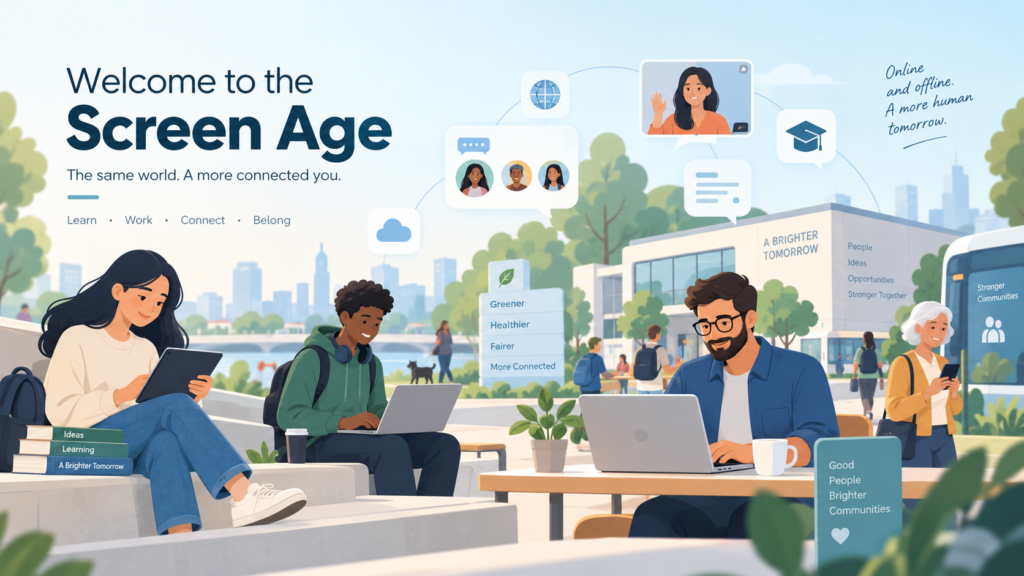
We are the architects of a new epoch. For most of our journey, humans lived in “Prehistory” (before writing) or “History” (using tools to record life). Today, we have crossed a monumental threshold into the Screen Age, or what we philosophers call Hyperhistory. This is the blueprint for your future sovereignty: we no longer merely use computers; our schools, our jobs, and our societal welfare now depend on them to exist. If the screens went dark, our civilization would cease to function.
Hyperhistory: A period in human development where the management of information is not just a helpful tool, but the essential condition for our society to flourish, stay healthy, and remain stable.
To navigate this era, you must understand the three most vital shifts in our reality:
• From Tools to Environments: We have moved from “using” the internet to living “Onlife.” The digital world is the water we swim in every day.
• The Dependency Shift: In G7 countries like the UK and US, over 70% of our wealth (GDP) now comes from “intangible” things data and knowledge rather than just physical goods like tractors or steel.
• The Robot Handshake: Most communication on Earth is now “machine-to-machine.” Our devices talk to each other to keep the world humming, often placing us “on the loop” rather than “in” it.
The “So What?” for the Learner: In the Screen Age, dependency creates vulnerability. If we do not manage our digital playground wisely, we lose the ability to learn, play, and connect. We are building this playground to ensure you remain the master of your environment, not its servant.
2. Building a Safe Playground (Pillar I: Infraethics & Privacy)
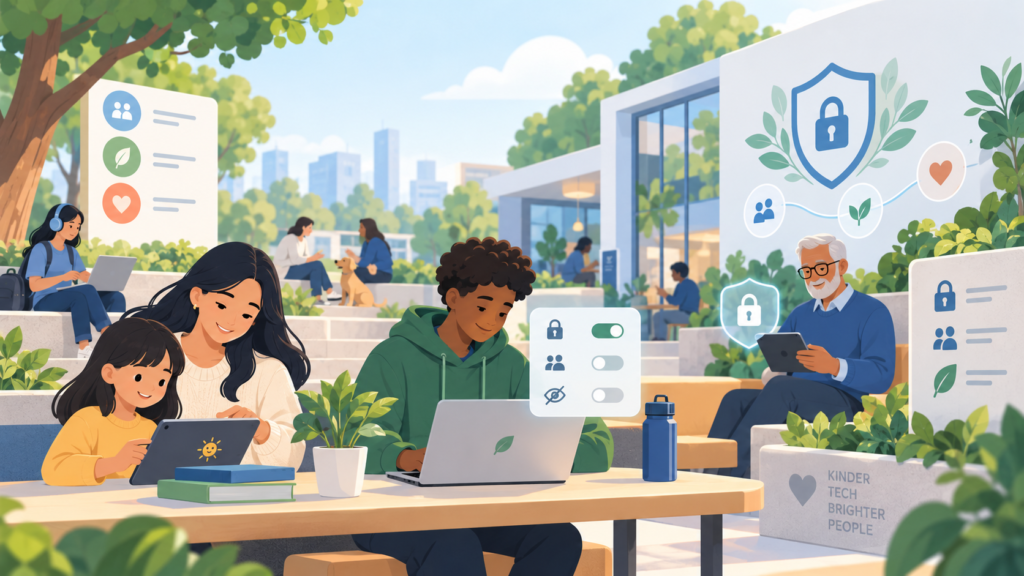
A playground is only a space of freedom if it is built with care. We architect this through Infraethics—the work of designing the “choice architecture” of our digital world. We must build the playground so that the “easy path” is naturally the “kind path.” Imagine a slide that safely guides you to the bottom; that is how our systems should encourage kindness and honesty by design.
A vital part of this safety is Privacy, which we define as Information Friction. Just as you need to “draw the curtains” or “close your bedroom door” to feel safe at home, you need digital friction so your private life doesn’t slide into public view instantly. We must champion Pro-ethical design, which avoids making choices for you and instead gives you the power to be a good citizen.
Our Strategic Design Goals
| A Poorly Built Playground | A Kind Playground (Infraethics) |
| Exposure: Everything you do is seen by everyone instantly, with zero friction. | Healthy Friction: “Digital curtains” protect your private life and personal data. |
| Nudging Toward Chaos: Systems are built to make anger and spam the easiest options. | Choice Architecture: The environment is a “slide” toward pro-ethical and kind behavior. |
| Machine Control: Algorithms decide your friends and your future without your input. | User Empowerment: You are the sovereign designer of your own digital space. |
Once we have built the walls and floors of our playground, we must turn our attention to how we tend the garden of information growing within it.
3. Digital Gardening (Pillar II: Managing Information & Learning to Forget)
We are currently submerged in a Zettaflood a massive tsunami of bytes. But as your Strategic Designer, I must tell you a secret: the treasure of the Screen Age is not the biggest pile of sand (Big Data); it is the tiny, sparkling gems hidden inside called Small Patterns.
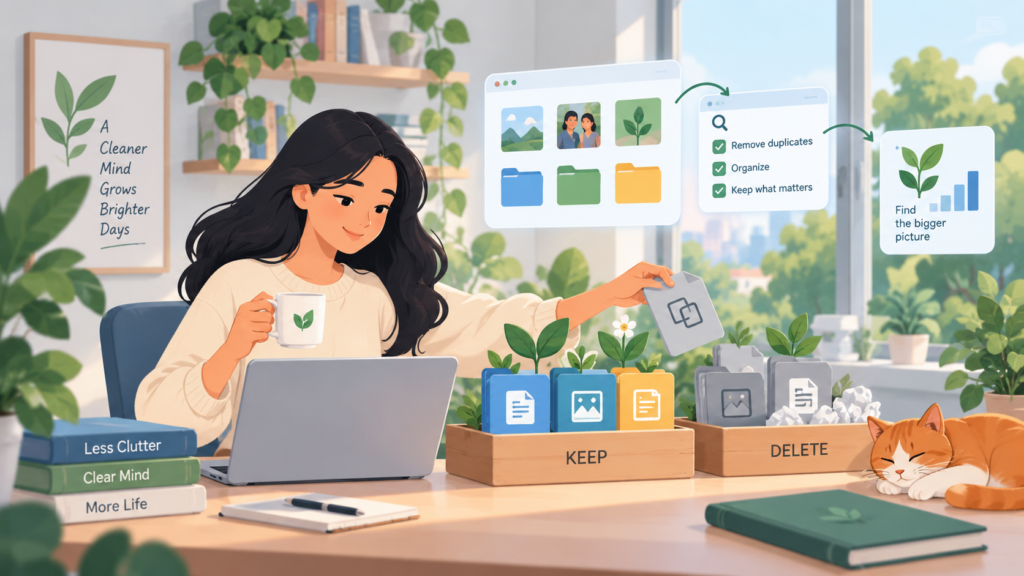
To find these gems, we must practice Digital Gardening. Because we are running out of storage room on our planet (the Storage Gap), we must learn that “weeding” is as important as “planting.” In the Screen Age, learning to forget is a superpower.
A 3-Step Guide to Digital Gardening
1. Pruning the Clutter: Delete the twelve identical, blurry photos of your lunch to make room for one great memory.
2. Weeding the Obsolete: Erase old files and messages that no longer have value, preventing “digital amnesia.”
3. Curation: Focus on finding the Small Patterns—the high-value habits and ideas that actually help you grow.
The 3 Benefits of Learning to Forget:
• Clarity: You create mental and digital space for “New Ideas.”
• Sustainability: You save the planet’s energy by not storing “junk” data forever.
• Re-invention: You gain the freedom to grow without being haunted by every past mistake.
Managing our “stuff” is only half the battle; we must also coordinate with the people and helpers who share our space.
4. A Big Team of Friends and Robots (Pillar III: Multi-Agent Governance)
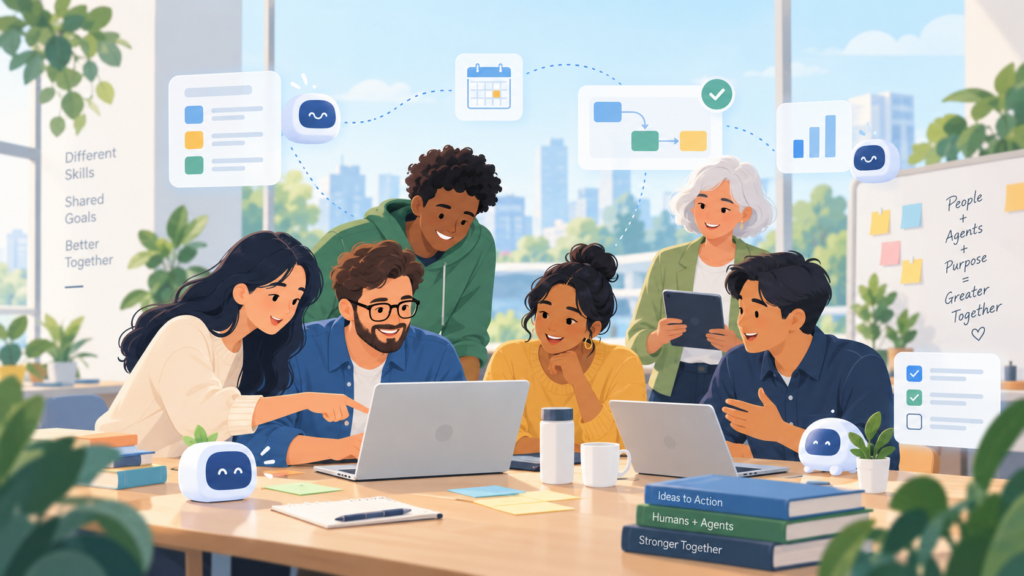
Our National Digital Playground has no “King.” In Hyperhistory, we don’t want a single person in charge because a King is a “single point of failure”—if the King is attacked, the whole playground falls. Instead, we use Multi-Agent Systems. We function as a robust team that works through “handshaking” and coordination.
The Playground Team Members
• Inforgs (Connected Friends): That is us! We are “informational organisms” who are the heart and soul of the playground.
• Smart Agents (Friendly Robot Helpers): These are the apps and algorithms that help us translate languages or find the best route home.
• Smart Groups: Teams where people and machines work together to solve giant problems like climate change.
We architect this team to be robust. By distributing power across many friends and robot helpers, the playground stays standing even if one part of the system is challenged.
Once we know who our friends and robot helpers are, we must learn how to build the toys we play with together.
5. Learning to Build Your Own Toys (Pillar IV: Maker’s Knowledge)
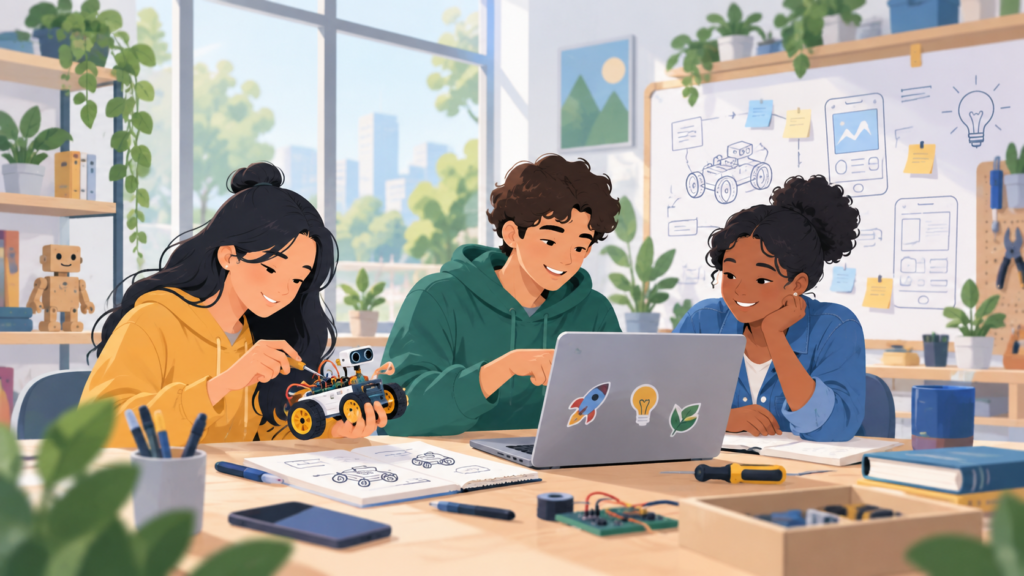
Our ultimate strategic mission is to move you from “Screen-Watching” (passive consumption) to “Toy-Building” (active creation). We call this Maker’s Knowledge. In the Screen Age, knowing how to build a digital toy—through coding, art, or design—is more important than knowing how to buy one. We want you to be a digital painter, not just a digital consumer.
The Mindsets of the Screen Age
| The Passive Watcher | The Digital Maker |
| Consumes: Scrolls endlessly, being fed information like a goose. | Creates: Uses code and design to build new worlds. |
| The Brick Mindset: Sees the world as hard, fixed, and unchangeable. | The Clay Mindset: Sees the world as malleable and ready to be reshaped. |
| Out of the Loop: Allows the machines to make every decision. | On the Loop: Stays in charge of the technology and its purpose. |
By adopting the Clay Mindset, you realize that the digital world is yours to mold. You are not a passenger; you are the creator of our “Onlife” future.
6. Our “Onlife” Future
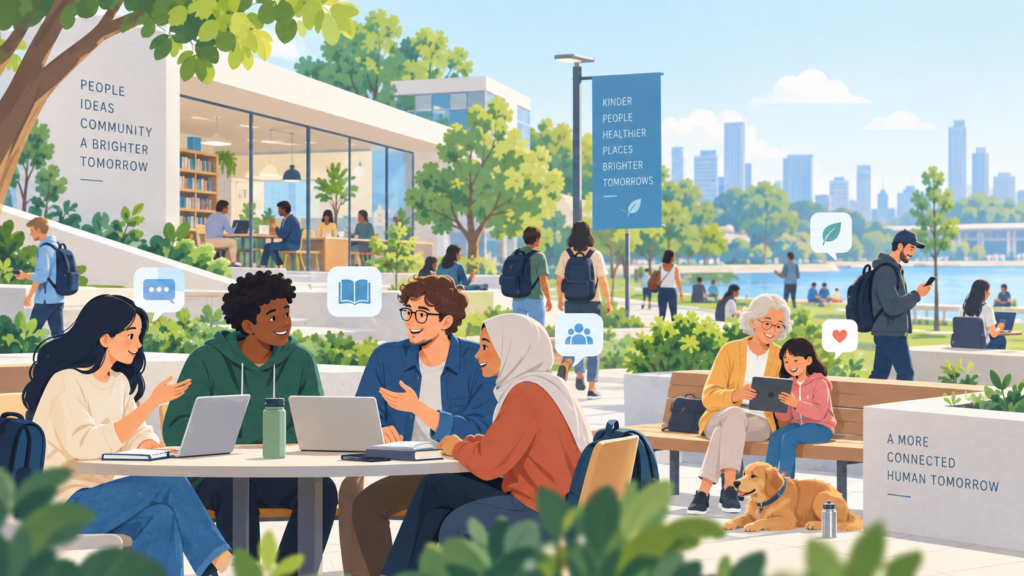
We no longer “log on” or “log off.” We live Onlife—a reality where the digital playground is a permanent part of our physical world. Our mission is to keep this playground safe, clean, robust, and full of builders.
Your journey as a Digital Gardener and Maker starts today. Protect your information friction, seek out the sparkling gems of small patterns, and always look at the world as clay waiting for your hands. The Screen Age is not something that happens to you; it is something you create.Key Takeaway: Our strategic goal is to architect a “Pro-Ethical” world where humans and smart machines work as a robust team, and every citizen uses a “Clay Mindset” to build, not just watch.